How to Weatherize Outdoor Mobile Lifts for Winter

Time:2026-10-01 Author:Mason
0%

Winter can turn a dependable outdoor mobile lift into a serious maintenance challenge. Freezing rain, blowing snow, road salt, and sudden temperature changes affect batteries, hydraulics, tires, controls, and steel frames. Learning how to weatherize outdoor mobile lifts for winter helps reduce preventable damage and supports safer operation when temperatures fall.

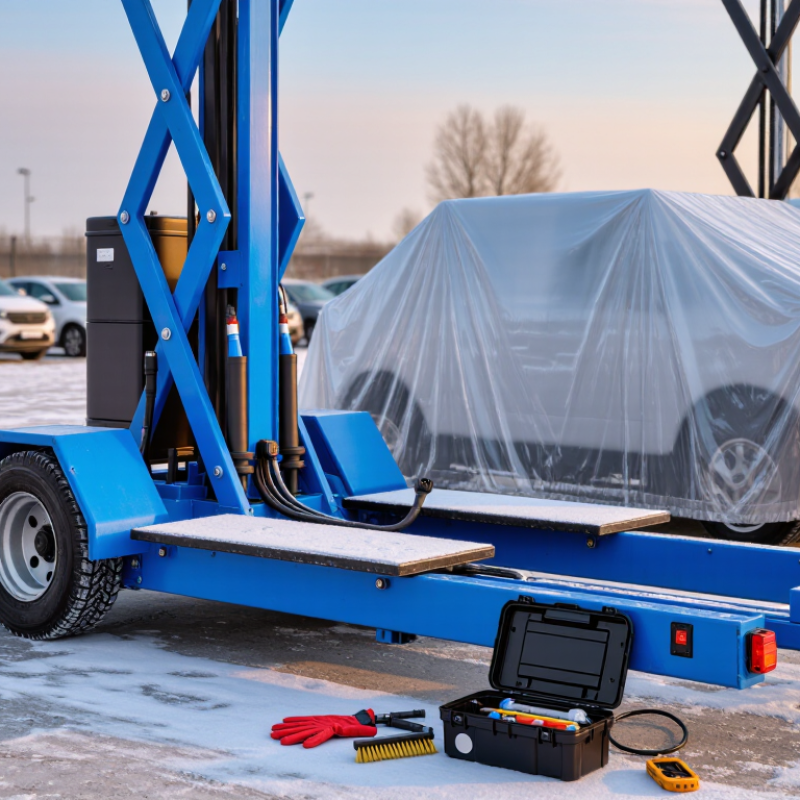
Weatherization is not simply covering the machine. It includes cleaning trapped dirt, drying electrical connections, checking hydraulic hoses, and protecting exposed metal from corrosion. A breathable, well-fitted cover can block snow without sealing moisture inside. Battery terminals should remain clean and protected, while batteries may need charging or temperature-controlled storage according to the manufacturer’s instructions. Tire pressure also deserves attention because cold air reduces pressure. Small losses matter.

Before storage or winter use, review the lift’s service manual and inspection requirements. Experienced technicians often photograph cable routing and control panels before covering equipment. That simple record can reveal changes later. Test emergency stops, alarms, brakes, and platform controls in a clear area, never under a heavy snow load. Remove ice carefully. Do not strike frozen components with tools.

Weather varies widely, so one winter checklist may not fit every site. Coastal air can accelerate rust, while dry inland cold may create brittle seals and weak batteries. I have seen protective covers create problems when they trapped condensation. That mistake is easy to repeat. Reinspect the lift after storms, thaws, and long idle periods. When damage, unusual movement, or fluid leakage appears, stop using the lift and contact a qualified service professional.
How to Weatherize Outdoor Mobile Lifts for Winter

Assess the Lift and Identify Winter Weather Risks

Before winter service, assess the lift as a working machine, not just parked equipment. Inspect tires, brakes, steering, guardrails, platform flooring, hydraulic hoses, batteries, and emergency-lowering controls. Look for cracked seals and slow leaks. Cold temperatures can expose weaknesses that warmer inspections miss.

The Bureau of Labor Statistics reported 885 fatal occupational injuries involving falls, slips, and trips in 2023. This figure covers all industries, but it shows why an icy platform deserves immediate attention. Remove packed snow, ice, mud, and spilled hydraulic fluid. Check whether outriggers or wheels can sink into frozen-thawed ground. A firm surface may soften by afternoon.

Wind is another overlooked hazard. The National Weather Service warns that wind increases heat loss and can create dangerous wind-chill conditions. Review the lift’s rated wind limit, then compare it with the local forecast before use. Strong gusts can shift a raised platform or move loose materials. Visibility may also decline during snow, fog, or early darkness. Keep lights, alarms, and warning labels clear.

In practice, crews sometimes focus on batteries and forget the ground beneath the lift. That mistake is understandable, but unsafe. Record defects with photographs, isolate equipment needing repair, and have a qualified person verify controls before operation. Weatherization should begin with honest risk assessment, not assumptions.

How to Weatherize Outdoor Mobile Lifts for Winter

Assess the lift and identify winter weather risks before use. The planning score rates how strongly each winter condition can affect traction, stability, visibility, corrosion, or electrical reliability.

Risk scale: 1 = lower concern, 5 = severe concern. Remove snow and ice, inspect tires and controls, protect batteries and electrical components from moisture, and follow the lift manufacturer’s operating limits for temperature, wind, and precipitation.

Clean, Inspect, and Repair the Mobile Lift Before Winter

How to Weatherize Outdoor Mobile Lifts for Winter

Clean, inspect, and repair the mobile lift before winter arrives. Dirt and road salt can hide cracked welds, loose fasteners, and hydraulic leaks. Wash the platform, base, wheels, and control panels with suitable low-pressure equipment. Keep water away from electrical connectors and control openings.

Let every surface dry completely. Then inspect the lift under strong lighting. Check tires for cuts, uneven wear, and pressure loss. Examine hoses for swelling, abrasions, or damp fittings. Look for rust around the chassis, guardrails, pins, and lifting joints. A small rust bubble may signal deeper corrosion. Do not ignore it.

Test emergency stops, alarms, limit switches, brakes, steering, and platform controls. The lift should respond smoothly without unusual noise or delay. Inspect batteries, terminals, and charging cables for corrosion or damage. Cold weather exposes weak batteries quickly. Clean the terminals and follow the equipment manual for storage and charging requirements.

Repair defects before parking the lift. Replace damaged guards, worn tires, leaking hoses, and unreadable safety labels with approved parts. Never rely on a quick patch for a structural problem. I have seen minor leaks become expensive failures after repeated freezing. That lesson is easy to overlook.

Park the lift on firm, level ground away from standing water. Lower the platform fully, remove loose tools, and secure the machine against unauthorized movement. Use a breathable weather cover, not a sealed plastic sheet that traps condensation. Record the inspection date and every unresolved concern. A second inspection may still be necessary after the first hard freeze.

How to Weatherize Outdoor Mobile Lifts for Winter - Clean, Inspect, and Repair the Mobile Lift Before Winter

No. Inspection Area Cleaning, Inspection, or Repair Action Acceptance Criteria Recommended Timing Priority Record Status
1 Work platform and guardrails Remove mud, salt, leaves, and standing water. Inspect the platform, toe boards, gates, guardrails, and welds for cracks, deformation, or loose fasteners. Surfaces are clean and dry; guardrails and gates operate correctly; no structural damage or missing hardware is present. Before the first freeze and after heavy storms High Pending / Complete
2 Hydraulic system Clean hydraulic components and inspect hoses, fittings, cylinders, and seals for abrasion, leaks, brittleness, or ice-related damage. No visible hydraulic leaks, damaged hoses, exposed reinforcement, or loose fittings; fluid level meets the equipment specification. Before winter storage and monthly during use High Pending / Complete
3 Hydraulic fluid and lubrication Verify that the hydraulic fluid viscosity is suitable for the expected low temperature. Lubricate approved pivot points and grease fittings with cold-weather-compatible lubricant. Fluid is clean and at the correct level; lubrication points are serviced without contaminating brakes, tires, or electrical parts. Before temperatures regularly fall below 5°C (41°F) High Pending / Complete
4 Battery and charging system Clean battery terminals, tighten connections, inspect cables, and fully charge the battery. For extended storage, use an approved maintenance charger or disconnect the battery as directed. Terminals are clean and tight; battery case has no cracks or swelling; charging voltage and cable insulation are within the service requirements. Before storage and every 30 days in storage High Pending / Complete
5 Electrical controls and emergency stop Check control panels, joysticks, emergency-stop switches, wiring connectors, warning alarms, and protective covers for moisture intrusion or corrosion. Controls respond correctly; emergency-stop functions immediately; connectors are dry, secure, and free from corrosion. Before each winter work shift High Pending / Complete
6 Drive system and brakes Remove debris from drive motors, axles, and brake components. Test forward, reverse, steering, parking brake, and service-brake functions on a level surface. Lift starts, stops, steers, and holds position without unusual noise, slipping, delayed braking, or excessive vibration. Before use and after prolonged outdoor storage High Pending / Complete
7 Tires, wheels, and outriggers Inspect tires for cuts, embedded objects, uneven wear, and pressure loss. Check wheel fasteners and inspect outriggers or stabilizers for corrosion and smooth operation. Tire pressure matches the equipment specification; wheel hardware is secure; stabilizers deploy and retract without damage or binding. Before each use and after temperature changes High Pending / Complete
8 Water drainage and ice control Clear drain holes, battery compartments, control-box covers, and chassis channels. Remove snow and ice before operation; do not use open flame to thaw components. Drainage paths are open, compartments remain dry, and no ice prevents movement of controls, gates, tires, or stabilizers. After snowfall, freezing rain, or wash-down High Pending / Complete
9 Corrosion protection Wash off road salt and de-icing chemicals with clean water, dry the lift thoroughly, and apply an approved corrosion inhibitor only to suitable metal surfaces. Salt residue and moisture are removed; coated surfaces show no active corrosion that could affect structural integrity or component operation. After exposure to salted roads or coastal air Medium Pending / Complete
10 Safety decals and documentation Clean and inspect warning labels, capacity plates, operating instructions, inspection records, and emergency contact information. Labels are legible and securely attached; damaged or unreadable safety information is replaced before the lift returns to service. Before winter deployment Medium Pending / Complete
11 Storage location and weather cover Park on firm, level ground away from drainage channels. Lower the platform, remove the key, engage the parking brake, and use a breathable weather cover that does not block ventilation. Lift is stable, controls are secured, water cannot pool around the chassis, and the cover prevents precipitation without trapping condensation. During storage periods longer than 24 hours High Pending / Complete
12 Cold-weather operational test After cleaning and repairs, perform a no-load functional test followed by a controlled operational test. Confirm lifting, lowering, steering, braking, alarms, and emergency systems. All functions operate smoothly without leaks, abnormal sounds, warning indicators, or control delays. After servicing and before returning to work High Pending / Complete
13 Defect management Tag out the lift if a safety-critical defect is found. Record the defect, isolate the equipment, and arrange repair by a qualified technician before use. Unsafe equipment is not operated; repairs are documented and the lift passes a post-repair inspection. Immediately when a defect is identified High Pending / Complete
14 Inspection records Document inspection date, operating hours, weather conditions, defects found, repairs completed, battery condition, and the person performing the inspection. Records are complete, dated, traceable to the lift, and retained according to the site’s maintenance procedure. At every inspection and repair event Low Pending / Complete

Protect Batteries, Hydraulics, Controls, and Electrical Systems

How to Weatherize Outdoor Mobile Lifts for Winter

Protect Batteries, Hydraulics, Controls, and Electrical Systems

Cold weather exposes weak maintenance habits quickly. Begin with the battery compartment. Clean dirt and corrosion from terminals, then tighten connections without over-torquing them. Charge batteries according to the service manual before storage. Some batteries require periodic charging, while others need different temperature limits. Never guess. Check electrolyte levels only when the battery design permits it, and keep ventilation openings clear.

Hydraulic systems need protection from moisture and freezing temperatures. Inspect hoses for cracks, rubbing, and hardened sections. Replace damaged parts before winter storage. Use only the approved fluid and viscosity for the expected temperature. Fully retract exposed cylinder rods when practical, then clean and protect them with a suitable product. Avoid sealing wet components under plastic covers. Trapped condensation can cause more damage than light snow.

Keep controls dry and responsive. Inspect switches, joysticks, emergency stops, connectors, and cable glands for water entry. Dry damp enclosures before covering the lift. Electrical cords should remain flexible, undamaged, and fully off standing water. Use weather-rated covers that allow airflow, not tightly wrapped plastic. I have seen careful operators miss small connector corrosion. It later caused intermittent faults that were difficult to reproduce. Record inspections, charging dates, fluid checks, and unusual noises. Recheck the lift after the first freeze, because preparation can still miss something.

Store or Shelter the Lift Using Proper Weatherproof Measures

Winter weather can damage an outdoor mobile lift even when it is not being used. I have seen moisture collect beneath covers and rust the smallest fasteners first. Choose a sheltered location with firm, level ground. A covered bay, garage, or raised platform works better than open grass.

Clean the lift before storage. Remove mud, salt, and standing water from the frame, wheels, controls, and lifting surfaces. Let every part dry fully. Inspect hoses, cables, tires, and safety labels for cracks or wear. Follow the equipment manual for battery removal, charging, and hydraulic storage procedures. Do not guess with batteries or fluid systems.

Use a breathable, waterproof cover that reaches low without touching the ground. Secure it against wind, but leave controlled ventilation to reduce condensation. Never wrap a damp lift in airtight plastic. That mistake can trap moisture for weeks. Place moisture absorbers inside sheltered compartments, away from electrical connections. Keep the lift clear of snow paths and roof runoff. Check it after storms, then brush snow away rather than striking frozen parts. Once a month, uncover the lift during a dry period and inspect for rust, pests, moisture, or pressure loss. I would document these checks, although rushed inspections are easy to overlook. Before returning the lift to service, test its controls and emergency features on stable ground.

Perform Winter Checks and Prepare the Lift for Safe Operation

How to Weatherize Outdoor Mobile Lifts for Winter

Perform Winter Checks and Prepare the Lift for Safe Operation

Winter preparation starts before freezing weather arrives. OSHA reports that falls caused 38.4% of construction deaths in 2015, making access equipment inspections especially important. IPAF’s Global Safety Report also identifies falls, overturns, and entrapment as recurring fatal-event categories. Snow and ice can hide small defects, so inspect the lift on level ground under good lighting. Check tires, outriggers, guardrails, gates, emergency stops, alarms, and hydraulic hoses. Look for cracked insulation and brittle cables. Small damage matters.

Tips: Remove ice from platforms and steps before every use. Use a stiff brush, not excessive force. Check hydraulic fluid and battery condition according to the service manual. Cold temperatures can reduce battery output and thicken hydraulic oil. Keep the operator’s manual inside a dry, sealed pouch. Record each inspection with the date, weather, defects, and corrective action.

Before raising the platform, test controls at ground level. Confirm that emergency lowering works correctly. Do not operate on frozen mud, hidden voids, or sloped surfaces without verifying stability. Wind can increase quickly around buildings and exposed sites. Stop work when conditions exceed the lift’s rated limits. I have learned that a rushed pre-start check creates false confidence. It feels efficient, but it is not. Let the machine warm gradually, and never bypass a warning device. A qualified person should remove damaged equipment from service until repairs are verified.

FAQS

Why should a mobile lift be prepared before winter?

Dirt, road salt, and moisture can hide cracked welds, loose fasteners, and hydraulic leaks. Cold weather exposes weak batteries quickly. Small problems grow.

How should the lift be cleaned before storage?

Wash the platform, base, wheels, and controls with suitable low-pressure equipment. Keep water away from electrical connectors and control openings. Let everything dry completely.

What parts need close inspection?

Check tires for cuts, uneven wear, and pressure loss. Examine hoses for swelling, abrasions, or damp fittings. Inspect rust around joints, pins, guardrails, and the chassis.

Which safety features should be tested?

Test emergency stops, alarms, limit switches, brakes, steering, and platform controls. The lift should respond smoothly without unusual noise or delay. Do not assume.

What should happen when defects are found?

Repair defects before parking the lift. Replace damaged guards, worn tires, leaking hoses, and unreadable safety labels with approved parts. Avoid quick patches on structural problems.

Where is the safest place to store the lift?

Choose firm, level ground under a covered bay, garage, or raised platform. Keep the lift away from standing water, snow paths, and roof runoff.

What type of cover should be used?

Use a breathable, waterproof cover that reaches low without touching the ground. Secure it against wind, but allow controlled ventilation. Airtight plastic traps condensation.

How often should a stored lift be checked?

Inspect it after storms and once monthly during dry weather. Look for rust, pests, moisture, and tire pressure loss. Document every inspection and unresolved concern. I might still miss something.

What should be checked before returning the lift to service?

Remove the cover and inspect the machine on stable ground. Test controls and emergency features. Confirm the platform, brakes, steering, batteries, and cables work properly.

Conclusion

Learning how to weatherize outdoor mobile lifts for winter begins with assessing the equipment and identifying risks such as freezing temperatures, snow, ice, moisture, wind, and poor visibility. Before winter arrives, thoroughly clean the lift, remove dirt and salt residue, inspect structural components, tires, hoses, fittings, and safety devices, and complete any necessary repairs. Special attention should be given to batteries, hydraulic systems, control panels, wiring, and electrical connections, which should be protected from moisture and extreme cold according to the equipment’s operating guidance.

When possible, store the lift in a dry, sheltered area. If indoor storage is unavailable, use suitable weatherproof covers while allowing proper ventilation and preventing trapped condensation. Keep access points protected, elevate the equipment away from standing water, and secure it against strong winds. During winter, perform regular checks for ice buildup, corrosion, fluid changes, battery condition, and damage caused by weather. Before returning the lift to service, clear snow and ice, test all controls and safety systems, and confirm stable ground conditions for safe operation.

Mason

Mason

Mason is a seasoned marketing professional with a deep expertise in the company's offerings and a passion for driving brand awareness. With a strong background in digital marketing strategies, he has an innate ability to connect with diverse audiences and effectively communicate product benefits.......