When people ask, “what are the OSHA height regulations for scissor lifts,” they often expect one maximum-height number. OSHA does not set a universal height limit for scissor lifts. Instead, compliance depends on guardrails, equipment design, workplace conditions, training, and the manufacturer’s instructions.
OSHA’s construction rules generally require fall protection when workers face a fall of six feet or more. Scissor lifts must have proper platform guardrails, secure access gates, stable foundations, and functioning controls. Employers must also inspect the lift before each shift and remove defective equipment from service. The machine’s rated capacity matters, too. Extra tools, materials, or two workers can quietly create a dangerous overload.
The numbers are serious. OSHA reported 1,069 construction fatalities in 2022, including 395 deaths from falls. That figure explains why a seemingly modest elevation deserves disciplined planning. NIOSH Director Dr. John Howard has emphasized, “Falls are preventable.” His statement is brief. The work is not.
A practical question remains: Is the lift suitable for this surface, reach, load, and weather? Level ground, locked casters, and a clear travel path can matter more than height alone. Workers should never climb guardrails or place ladders on the platform. That shortcut may feel efficient, but it defeats the lift’s protection system.
This guide examines OSHA 29 CFR 1926.451 and 1926.452, relevant general-industry requirements, inspection expectations, and real job-site decisions. Requirements can be misunderstood. Manufacturer guidance and competent-person judgment must remain part of the answer.
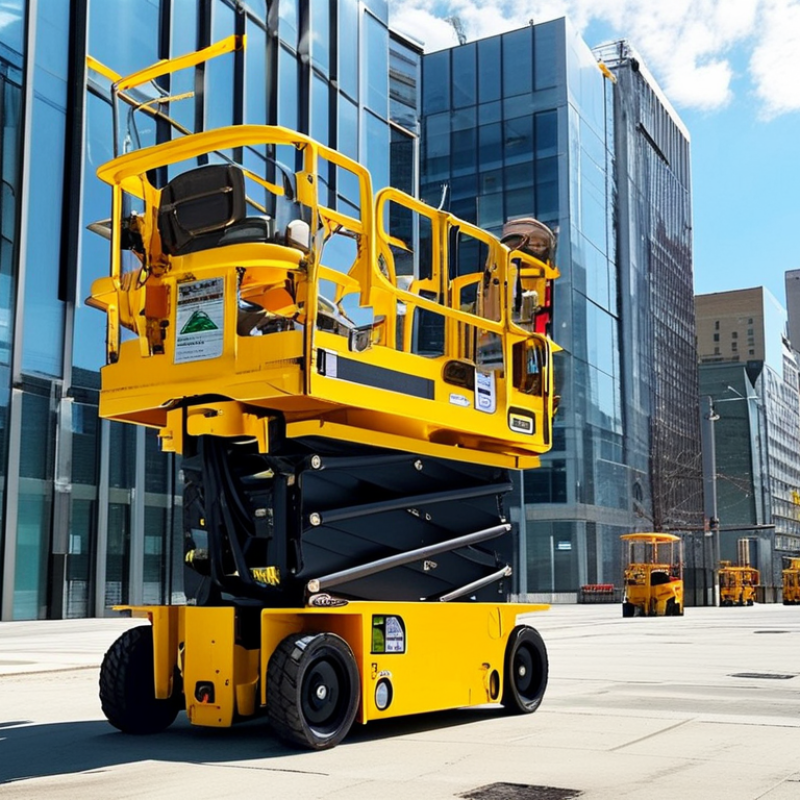
OSHA does not set one universal maximum height for every scissor lift. Instead, height and use depend on the equipment’s design, rated capacity, and workplace conditions. In construction, scissor lifts are generally treated as mobile scaffolds under OSHA rules, including 29 CFR 1926.452(w). The platform must be fully decked, guardrails must be installed, and casters or wheels must remain secured during work.
Height changes the risk.
Before raising the platform, workers should inspect the surface for holes, slopes, debris, and weak flooring. The lift should stay within its manufacturer-rated height and load limits. Never add a ladder, box, or makeshift platform to gain extra reach. OSHA also requires protection against falls from elevated work areas. Guardrails are the primary protection, while personal fall protection may be required by the equipment instructions, site rules, or a hazard assessment. Workers must keep the entry gate closed and avoid climbing or sitting on guardrails.
Training matters at every height. Operators should understand controls, emergency lowering, overhead hazards, and safe travel procedures. A pre-use inspection should check tires, brakes, alarms, guardrails, and visible damage. It sounds routine. It is often rushed. Even experienced crews can misjudge a slope or overhead obstruction, especially when production pressure increases. Supervisors should document training and remove defective equipment from service until a qualified person approves its return.
| Compliance Dimension | OSHA Requirement | Height or Measurement | Practical Application to Scissor Lifts |
|---|---|---|---|
| Maximum lift height | OSHA does not establish one universal maximum platform height for all scissor lifts. | No single OSHA maximum | The permitted working height depends on the equipment’s rated design, manufacturer instructions, workplace conditions, and applicable OSHA requirements. |
| Scissor lift classification | Scissor lifts are generally treated as mobile scaffolds when used in construction. The applicable scaffold requirements address stability, platforms, access, guardrails, and movement. | Not based on a fixed lift height | Determine which OSHA standard applies before use. Do not assume that rules written for boom-supported aerial lifts automatically apply to every scissor lift. |
| Fall protection on scaffolds | Employees on scaffolds more than 10 feet above a lower level must be protected by guardrails, personal fall arrest systems, or another permitted method under the applicable scaffold rule. | More than 10 ft | Keep the platform guardrail system properly installed and use any required personal fall protection in accordance with the equipment and site safety program. |
| Unprotected sides and edges | Construction employees exposed to unprotected sides or edges generally require protection when the fall distance is 6 feet or more. | 6 ft or more | This construction fall-protection threshold does not authorize removal of scissor lift guardrails. Guardrails must remain in place unless a specific OSHA-compliant procedure permits otherwise. |
| Guardrail height | Scaffold toprails generally must be approximately 38 to 45 inches above the platform or walking surface, subject to the applicable OSHA scaffold requirements. | 38–45 in. | Inspect the platform rails, midrails, toeboards, gates, and chains before use. Do not stand on rails or use boxes, ladders, or other devices to gain additional height. |
| Toeboards | Where required to prevent falling objects, scaffold toeboards generally must be at least 3.5 inches high and secured against displacement. | At least 3.5 in. | Use toeboards or an equivalent protection method when people below could be exposed to tools, materials, or debris falling from the platform. |
| Platform stability | Mobile scaffolds must be kept plumb, level, and squared. Supporting surfaces must be firm and capable of supporting the equipment and its load. | No slope value replaces site assessment | Use on a stable, level surface whenever required by the equipment instructions. Watch for holes, slopes, soft ground, drop-offs, ramps, and floor openings. |
| Moving an elevated lift | Mobile scaffold movement is restricted when employees are on the platform. Movement is allowed only under the conditions permitted by the applicable OSHA rule and equipment instructions. | Not a height exemption | Lower the platform before relocation unless a specific, documented procedure allows movement while elevated. Control speed, route, surface conditions, and overhead hazards. |
| Overhead clearance | OSHA does not provide one universal clearance distance for every scissor lift operation. Electrical safety rules and site controls govern clearance from energized conductors. | Must be evaluated before operation | Survey power lines, ceilings, beams, sprinklers, pipes, doors, and other overhead obstructions. Apply the required minimum approach distance for the voltage and work situation. |
| Load and platform capacity | The lift must not be loaded beyond its rated capacity. The total load includes workers, tools, materials, and any equipment placed on the platform. | Use the equipment’s rated capacity | Do not increase working height by adding materials, improvised platforms, ladders, or other devices. Keep loads evenly distributed and within the rating. |
| Training and authorization | Employers must ensure that workers are trained and competent for the hazards, controls, inspection procedures, and operating rules associated with the equipment and task. | Required before operation | Training should cover controls, fall hazards, stability, capacity, terrain, overhead hazards, emergency lowering, charging or fueling, and site-specific procedures. |
| Pre-use inspection | Scaffolds and work equipment must be inspected by a competent or otherwise qualified person as required by the applicable OSHA standard and employer program. | Before each shift or use, as applicable | Check guardrails, platform, tires or casters, brakes, controls, emergency systems, alarms, leaks, structural components, decals, and any damage or defects. |
| Unsafe equipment | Defective or damaged equipment must be repaired or removed from service until it is safe for use. | Any unsafe condition | Tag and isolate a lift with failed safety devices, damaged rails, hydraulic leaks, control problems, unstable components, or other conditions that could affect safe operation. |
| Fall arrest connection | When personal fall arrest is required, the system must be attached to an approved anchorage or attachment point designed for that purpose. | Not a substitute for guardrails | Never attach to guardrails unless the equipment is specifically designed and approved for that connection. Follow the lift’s instructions and the employer’s fall-protection plan. |
| Construction versus general industry | The applicable OSHA requirements can differ depending on whether the work is construction or general industry and how the equipment is classified and used. | Depends on work activity | Identify the applicable OSHA standard, state-plan requirement, electrical rule, and site policy before selecting fall protection or operating procedures. |
: Workers need site-specific training from a qualified or competent person. Training must cover controls, hazards, load limits, stability, and emergency procedures. A short video is not enough.
Training should include a pre-use inspection, ground-level control checks, and controlled driving practice. The operator should identify potholes, overhead obstructions, traffic, and electrical hazards before lifting.
Inspect the tires, brakes, alarms, controls, guardrails, entry gate, and emergency lowering system. Check the surface for holes, slopes, and weak ground. Small details matter.
Guardrails should remain installed, secured, and closed during operation. Workers should stand on the platform floor. Do not climb rails, use ladders, or stand on boxes.
Not always. Requirements depend on the work sector, equipment design, fall exposure, and local rules. A harness, lanyard, or restraint system may be required when protection is missing or site procedures demand it. Connect only to an approved anchor point.
Keep the entry gate closed and stay inside the guardrails. Do not lean beyond them. Remove loose tools from the platform. A falling wrench can injure someone below.
The surface must support the lift without shifting. Watch for slopes, potholes, edges, wind, and poor visibility. Stop when conditions change. Routine work can fool you.
Retraining is needed after an accident, unsafe operation, equipment change, or new workplace hazard. A worker may understand the controls but still misjudge unstable ground. Another practice session may be necessary.
Records should include the worker’s name, training date, instructor, and subjects covered. Keep the operating manual available. Requirements can vary by location and job type, so confirm the applicable rules.
Understanding what are the OSHA height regulations for scissor lifts is essential for maintaining a safe and compliant worksite. Employers should evaluate the lift’s platform height, the surrounding work area, and the potential hazards associated with elevated tasks. Height should be measured from the ground or supporting surface to the platform or working level, while also considering uneven terrain, overhead obstructions, and nearby equipment. Operators must receive appropriate training before using a scissor lift, including instruction on controls, stability, inspections, load limits, and emergency procedures.
Fall protection measures should match the equipment and work conditions. Guardrails, gates, personal protective equipment, and safe entry and exit practices must be used as required by the job hazard assessment. Employers can support compliance through documented inspections, preventive maintenance, clear operating procedures, refresher training, and immediate correction of unsafe conditions. Consistent supervision and accurate records help ensure that scissor lifts are used safely at any working height.

 Kleen Lift