An order picker that stops working at height creates an immediate safety concern. The platform may be raised, an aisle may be blocked, and a worker may be unsure whether the controls will respond. Even a brief pause can feel much longer in that position. Do not treat a stalled machine as a routine delay. Stop nearby traffic, keep other workers clear, and follow the equipment manufacturer’s emergency instructions. Never climb down the mast or attempt an improvised rescue.
Understanding why an order picker fails at height helps teams respond calmly and prevent repeat incidents. Possible causes include a low battery, an activated safety interlock, an obstruction, or a fault in the hydraulic or electrical system. The exact cause depends on the model, so guessing is not enough. If you are asking what to do when an order picker fails at height, begin with the approved emergency-lowering procedure and your site’s rescue plan. Use those steps only if trained and if conditions allow. Otherwise, contact the designated supervisor or qualified service technician, and keep the area secured. Small details matter: the displayed fault code, platform position, and any unusual sound can help a technician diagnose the problem. It is easy to rush. That is when checks get missed. This guide explains common failure signs, safe response steps, and practical maintenance habits, while recognizing that every machine and workplace has its own procedures.
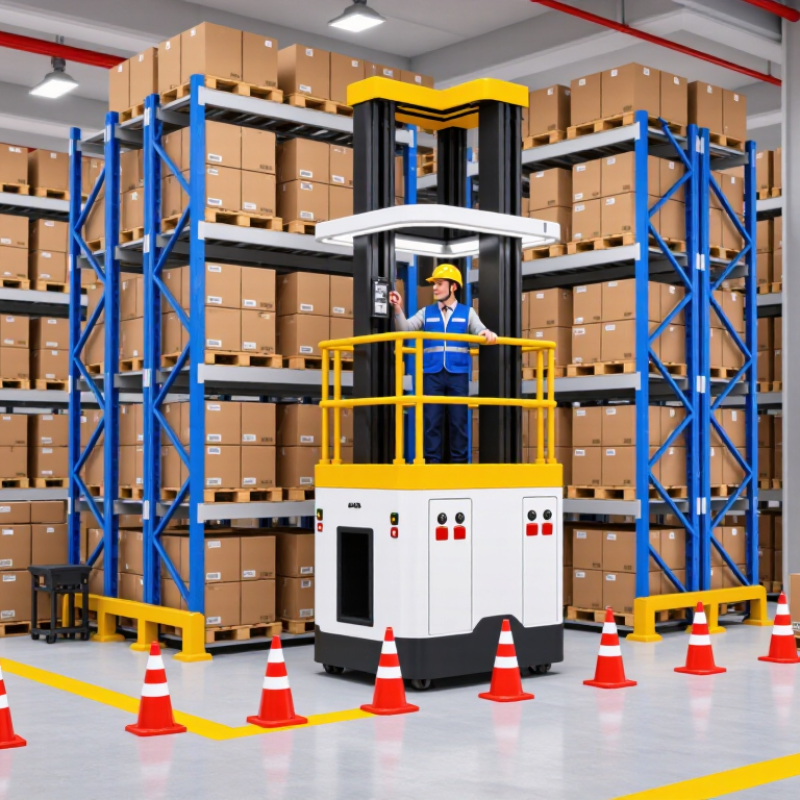
An order picker raises the operator on a platform so items can be selected directly from elevated racks. The operator checks the controls, platform gate, forks, and visible mast components before moving. Then the truck is positioned on a clear, level aisle, and the platform rises smoothly to the picking location. Height changes everything.
At the rack, the operator keeps both feet inside the platform and handles cartons within the truck’s rated capacity. Small movements matter. Reaching far beyond the guardrails can shift balance, even when the item seems light. Place selected goods in the designated container, keeping heavier items low and the load secure. Some models allow limited travel while raised; others require lowering first. The equipment instructions determine the safe procedure.
A good routine includes checking the floor for debris, watching for overhead obstructions, and keeping pedestrians clear of the aisle. The operator should use required personal protective equipment and follow site rules for fall protection. If the platform jerks, controls respond slowly, or the truck feels unstable, stop and report it rather than improvising. In busy warehouses, people sometimes rush this check. That is understandable, but it is also where small problems can become serious.
| Operating Factor | What Changes at Elevated Heights | Common Failure or Warning Sign | Likely Cause | What to Do |
|---|---|---|---|---|
| Load capacity | The truck’s rated capacity applies only under the conditions stated on its capacity plate, including the specified load arrangement and any attachments. | The platform will not lift, an overload warning appears, or the truck feels unstable. | The combined weight of the operator, tools, and goods exceeds the permitted capacity, or the load is positioned outside the approved arrangement. | Check the capacity plate and operator’s manual. Confirm the total load and its position before lifting; never bypass an overload protection system. |
| Load placement | A poorly secured or uneven load can shift as the platform rises, making picking and truck stability less predictable. | Goods move, lean, or become difficult to reach safely. | The load is unsecured, overhanging, unevenly distributed, or being handled outside the platform’s approved configuration. | Secure and distribute goods as directed by the manufacturer. Keep the operator within the designated working area and do not climb on racks or guardrails. |
| Mast and structure | The mast and lifting system are under greater extension when the platform is raised; damage or abnormal movement can compromise safe operation. | Unusual noise, jerking, visible damage, or movement that differs from normal operation. | Wear, impact damage, a mechanical or hydraulic fault, or operation beyond the truck’s intended limits. | Stop, lower the platform if it is safe to do so, and report the fault. Remove the truck from service until inspected and repaired by qualified personnel. |
| Floor condition and truck stability | Uneven, damaged, sloped, or obstructed floors can affect stability and steering, especially when the platform is elevated. | The truck tilts, rocks, or does not travel smoothly; a wheel encounters a floor defect. | Floor damage, debris, an unsuitable gradient, or operation outside the surface conditions specified for the truck. | Inspect the route before use. Operate only on suitable surfaces and within the manufacturer’s limits; do not raise the platform on an unsuitable or unstable floor. |
| Travel with platform raised | Visibility, clearance, and stability can be reduced while elevated. Whether travel is allowed, and at what height or speed, depends on the specific truck. | Contact with racking or overhead structures, poor steering response, or unexpected movement. | Traveling elevated contrary to the operating instructions, excessive speed, or failure to check the route and clearances. | Follow the truck’s operating manual and site procedures. Lower the platform for travel unless the truck is specifically designed and permitted for elevated travel. |
| Overhead clearance | As the platform rises, the operator and truck approach lights, sprinklers, beams, conveyors, and other overhead hazards. | The platform stops unexpectedly or equipment or stored goods contact an overhead obstruction. | Insufficient clearance, an unrecognized obstruction, or inaccurate assessment of the truck’s raised dimensions. | Check the complete lift path and overhead clearance before raising. Keep clear of electrical hazards and follow site-specific isolation procedures where required. |
| Visibility and picking access | Rack beams, stored goods, and the platform position may restrict the operator’s view or make the pick difficult to reach. | The operator leans out, reaches beyond the safe work area, or cannot see the load or surroundings clearly. | Poor positioning, obstructed sightlines, unsuitable slot layout, or inadequate lighting. | Reposition the truck at a safe, approved location. Keep the body inside the designated area, use adequate lighting, and request assistance when visibility is restricted. |
| Battery and controls | Low charge or a fault in the electrical, hydraulic, or control system can interrupt lifting or movement at height. | Slow or unavailable lift, warning indicators, intermittent controls, or loss of function. | Low battery charge, a system fault, or operation despite a warning or failed pre-use check. | Complete pre-use checks and monitor warnings. If a fault occurs while elevated, follow the emergency-lowering procedure and contact trained personnel; do not improvise repairs. |
| Wind and outdoor use | Wind can affect an elevated platform and its load. Many warehouse order pickers are intended for indoor use only. | Platform movement, difficulty controlling the truck, or instability in exposed conditions. | Outdoor operation or wind exposure beyond the truck’s design limits. | Use the truck only in the environments and conditions specified by its manufacturer. Do not use an indoor-only truck outdoors. |
| Fall protection and operator training | Working at height requires use of the truck’s designated platform, guarding, and any fall-protection equipment specified for that model and task. | Missing or incorrectly used protective equipment, unsafe access, or operation by an untrained person. | Insufficient training, failure to follow site rules, or equipment not being used as designed. | Use only the approved access points and protective systems. Operators must be trained and authorized for the truck, and must follow the manufacturer’s instructions and applicable workplace requirements. |
Safety note: Operating limits, permitted travel height, load capacity, emergency-lowering steps, and fall-protection requirements vary by truck model. Always consult the capacity plate, manufacturer’s manual, and applicable workplace procedures.
A weak battery, low hydraulic fluid, leaking hoses, or worn seals can reduce lifting performance. Repeated lifts may make a weak battery more noticeable.
Watch for slow lifting, vibration, unusual sounds, warning lights, or jerky movement. Stop and report changes. Small signs matter.
Yes. Uneven concrete, floor joints, or debris near a wheel can affect a raised platform. A clean-looking floor is not always level.
Keep it centered and within the platform’s specified area. Even a small off-center carton can increase sway at height.
Keep the platform still and alert nearby workers. If safe, follow the manual’s controlled-descent instructions. Otherwise, use the designated emergency-lowering procedure with trained assistance. Keep people below clear.
No. Lower it when safe, remove it from service, and arrange an inspection by qualified service personnel. Do not bypass alarms or interlocks.
Note warning codes, load position, unusual sounds, and when the problem occurred. Mention whether it followed charging or maintenance. These notes help, but they do not replace inspection.
Check the gate, controls, tires, wheels, and visible lift components. Look for fresh fluid beneath the machine, and clear dust or debris from rails and sensors. A rushed check can miss things.
The lift system, mast, chains, brakes, wheels, wiring, and safety switches may need attention. Document function checks before returning the picker to work.
Order pickers allow operators to reach inventory stored above floor level, but working at height places greater demands on the lift system, controls, power supply, and stability. A failure may result from a depleted battery, an electrical or hydraulic fault, a sensor issue, an overloaded platform, or uneven flooring. Elevation can make problems more serious because the raised platform changes the equipment’s center of gravity and may affect lifting performance, balance, and safe movement.
If you are considering what to do when an order picker fails at height, keep the operator on the platform, stop movement, and follow the equipment’s emergency-lowering procedure if it can be used safely. Keep others clear and do not attempt an improvised repair or climb down from the elevated position. Once the operator is safely lowered, take the machine out of service, record the symptoms, and have a qualified technician inspect it. Regular battery checks, maintenance of lift components and sensors, load-limit compliance, and pre-use inspections can help prevent similar failures.

 Kleen Lift